Understanding U.S. Traffic Signs and Road Markings
Traffic signs and road markings in the United States may look familiar at first, but many meanings and enforcement expectations are different from Japan. For Japanese drivers in California, small misunderstandings about signs, lane lines, or signals are a common cause of confusion — and traffic tickets.
In California, the system assumes drivers will notice signs quickly, interpret them correctly, and act without hesitation. This guide explains the most important U.S. traffic signs and road markings you should understand, with special attention to rules that often surprise Japanese drivers.
Why Traffic Signs Feel Different in the U.S.
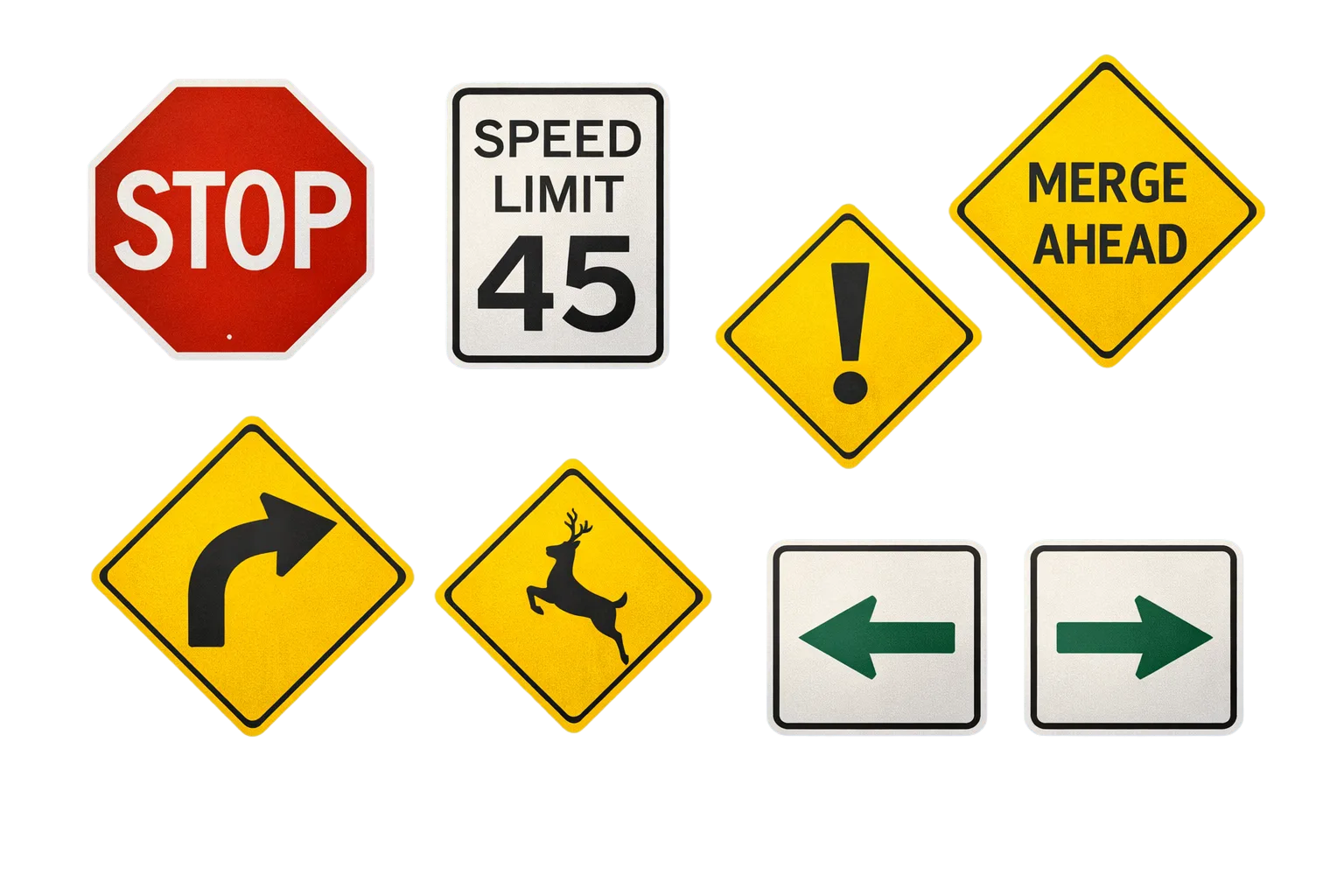
U.S. road rules rely more on direct sign instructions and individual driver judgment than gradual guided control. Compared to Japan, there is less step-by-step visual guidance and more responsibility placed on the driver to read and decide quickly.
In practice, this means drivers are expected to:
- read written signs, not only symbols
- react based on posted rules
- make independent decisions at intersections
- follow the exact wording of signs
Understanding this expectation shift makes adaptation much easier.
STOP Signs (Strictly Enforced)
STOP signs in California are enforced very literally. A STOP does not mean slow down — it means a full and complete stop every time.
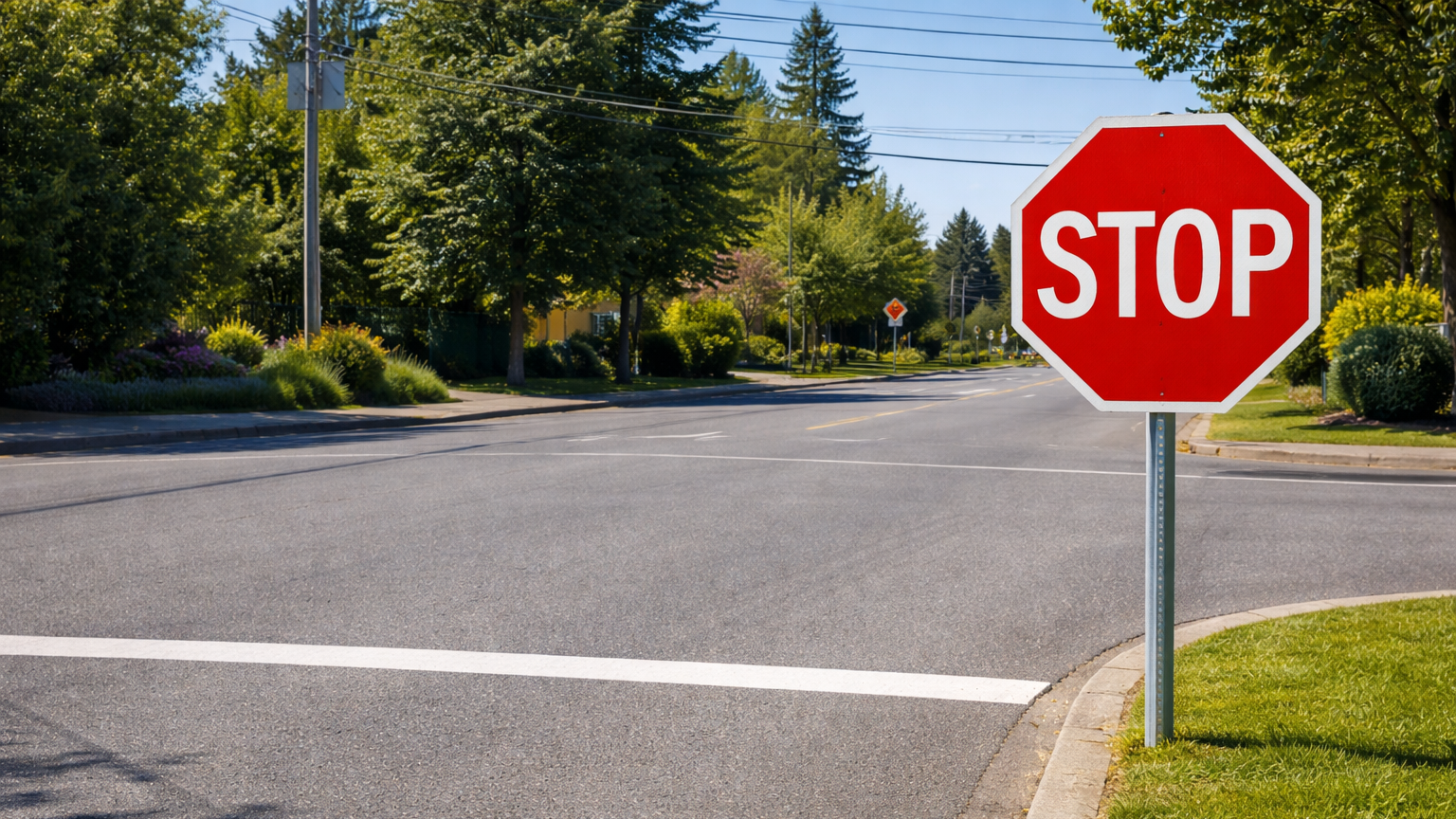
To comply correctly:
- your wheels must fully stop
- stop before the line or crosswalk
- check pedestrians and cross traffic
- proceed only when safe
Rolling stops are one of the most common ticket causes for Japanese drivers because enforcement is stricter than in Japan.
Right Turn on Red (Unless a Sign Prohibits It)
One major difference from Japan is that right turns at red lights are usually allowed in California. However, this rule has conditions and is often misunderstood.
A right turn on red is allowed only when:
- you make a full stop first
- no “No Turn on Red” sign is posted
- the path is clear and safe
- pedestrians have yielded
Turning without fully stopping is frequently cited by police.
Speed Limit Signs vs Traffic Flow
Speed limit signs in California show the legal maximum speed, not a suggestion. Many newcomers assume matching traffic flow is acceptable, but enforcement is based on the posted number.
Keep in mind:
- posted limits are legally enforced
- small overages can still be cited
- school and residential zones are stricter
- enforcement varies by location
Always follow the sign, not the crowd.
Lane Markings (Road Line Rules)
Lane markings communicate rules about direction and lane changes. These painted lines carry legal meaning and are enforced.
White lines separate traffic moving in the same direction:
- dashed = lane change allowed
- solid = lane change discouraged
Yellow lines separate opposite directions:
- solid yellow = no passing
- double yellow = do not cross
Misreading lane markings often leads to improper lane changes or illegal turns.
Pedestrian Crosswalk Rules
California strongly protects pedestrian right-of-way. Drivers are expected to anticipate pedestrian movement, not wait for perfect timing.
Drivers must:
- stop when a pedestrian is in a crosswalk
- yield even without traffic signals
- avoid turning through active crossings
Violations can result in high fines.
Traffic Signals and Arrow Lights
Traffic lights often include directional arrows that override normal signal meaning. These arrows must be followed exactly.
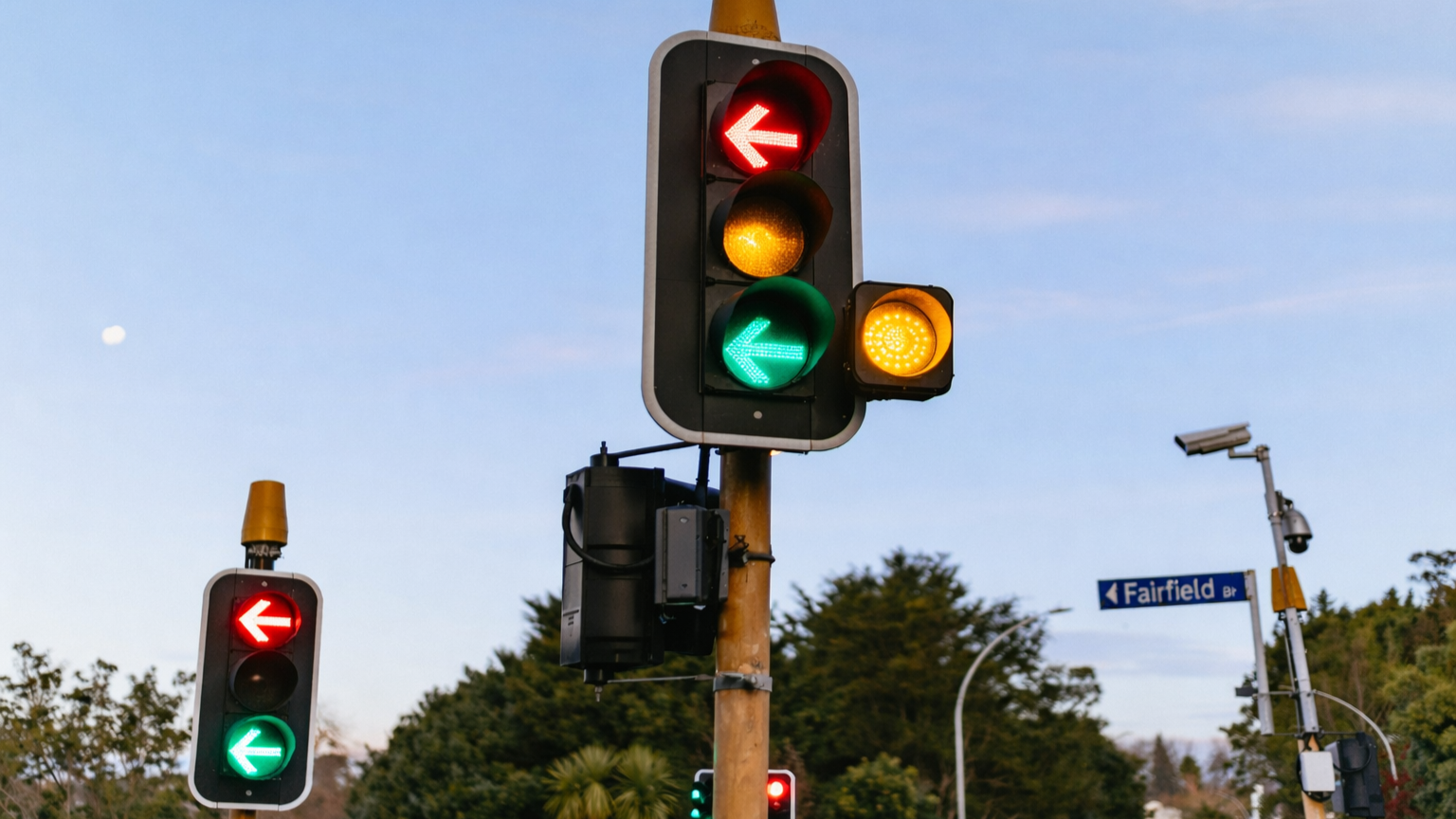
Common meanings:
- green arrow = protected turn
- yellow arrow = prepare to stop
- red arrow = turning not allowed
Do not assume arrow behavior matches Japanese signals.
Parking Signs and Curb Colors (Quick Note)
Parking control in California is sign-based and color-coded. Even short stops in restricted curb zones can result in tickets.
Typical curb colors include:
- red = no stopping or parking
- white = passenger loading
- yellow = commercial loading
- green = time-limited parking
Full parking rules are explained in a separate guide.
Common Mistakes New Drivers Make
Most sign-related tickets happen because of habit carryover, not reckless driving. The most frequent issues include:
- rolling through STOP signs
- turning right on red without stopping
- misreading lane lines
- failing to yield to pedestrians
Awareness alone prevents many tickets.
Summary
U.S. traffic signs and road markings are clear but strictly enforced. The system expects fast recognition and exact compliance rather than flexible interpretation.
Remember the essentials:
- STOP means full stop — always
- right turn on red is conditional
- lane markings are legal boundaries
- pedestrian right-of-way is strongly enforced
With attention and practice, these rules become natural, and driving confidence increases quickly.
Frequently Asked Questions
Do I always have to stop fully at STOP signs?
Yes. Rolling stops are violations.
Is right turn on red always allowed?
No. Only when there is no sign prohibiting it and it is safe.
Are pedestrian rules enforced strictly?
Yes. California enforces pedestrian right-of-way strongly.
Enjoying this guide?
Get the next one in your inbox — no spam.
Get Notified When Courses Launch
Be the first to know when our DMV-licensed traffic courses become available. No spam, just one email.